


StanleyBet Reviews, StanleyBet Opinions
Practical overview for adult users in Italy who want to understand access, wallet, support, and mobile use in 2026.
Table of Contents
Bonuses & Promotions
100% up to $500
+ 77 Free Spins on first deposit
77 Free Spins
Every Friday on deposit
50% up to $300
On every second deposit
Up to 15%
Every Monday on losses
Casino Overview
| Established | 2019 |
|---|---|
| License | Curaçao eGaming |
| Games Available | 3,000+ |
| Minimum Deposit | $5 |
| Withdrawal Time | Instant – 24h |
| Customer Support | 24/7 Live Chat & Email |
Game Providers







How to read StanleyBet Opinions on the account
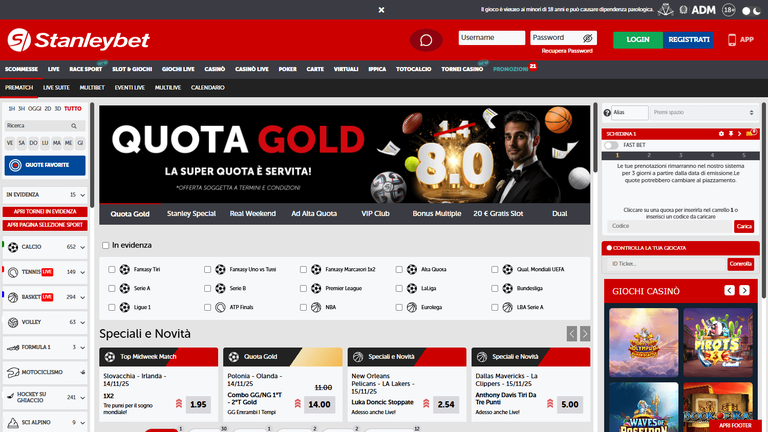
When a person opens an online casino for the first time, they tend to form an opinion very quickly. They look at the homepage, notice a promotion, observe the menu, and think they've already understood if the product is for them. In reality, the true quality of a platform is seen in a different way: in small, repeated actions. Logging in, checking the balance, reading the history, understanding the wallet, finding a section, and exiting without confusion says much more than any first impression.
Imagine a simple situation. You have ten minutes free, you open your account from your smartphone, and you just want to see the balance, understand how the wallet is moving, and then stop. At that moment, you don't need spectacular graphics. You need a structure that doesn't make you lose focus and doesn't force you to guess where the functions you'll actually use are located.
For adult users in Italy, the central point is precisely this: does the account accompany the routine or make it heavier? If the path is clean, even a brief access remains clear. If, on the other hand, the main information is scattered, every visit leaves a bit more fatigue. A useful evaluation begins here, not in generic promises.
How to read StanleyBet RTP in a practical way
When talking about theoretical return, many users look for a dry and definitive answer. In practice, however, a number taken alone says little if it's not placed in the context of the account. It matters how the player usa the platform, how long a session lasts, how the wallet is managed, and how easy it is to review the movements afterward. Without this framework, the data remains too abstract.
Imagine logging in with little time and a predetermined budget. In that case, it makes more sense to understand if the account helps you maintain control of the session than to chase an isolated value as if it were enough on its own to guide a choice. The most useful reading always arises from the combination of realistic expectations, duration, and clarity of the path.
When external feedback is truly helpful
External opinions can be useful, but only if read carefully. A very enthusiastic or very critical comment almost always tells part of the story, not the whole picture. Therefore, it's advisable to compare each judgment with what you would actually do: access, wallet, history, support, limits, and exiting the session.
Imagine reading three different opinions on the same evening. One praises the simplicity, one criticizes the support, one speaks well of the mobile experience. If you focus on the emotional tone, you don't get much. If, instead, you compare them with your daily actions, you begin to understand which details truly matter for how you use your account.
Registration, profile, and first login
Registration should not feel like a race. For adult users in Italy, in compliance with applicable regulations, the healthiest way to start is linear: create the account, verify the data, strengthen the login, and only then decide whether to proceed with other steps. This sequence is important because it separates initial curiosity from decisions involving money and habits.
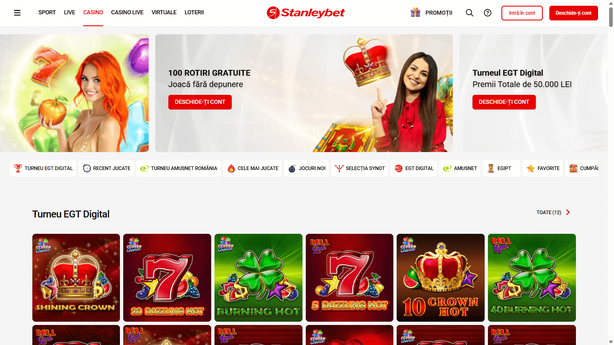
Imagine opening the platform in the evening, after work, with a very simple goal: prepare everything for the weekend. You don't want to start a long session yet. You just want to check your profile, understand where the wallet, history, and management tools are. If the account supports this initial setup well, practical confidence grows. If, on the other hand, everything seems to push you forward without giving you time to understand, the experience starts with more friction than necessary.
Even daily returns matter a lot. Some people log in only once a day, others more often: once to check the balance, once for a short session, once to check a transaction. If the login is clear and orientation remains stable, the account usa better over time. If, on the other hand, each login feels like a small restart, the perceived quality decreases.
How to prepare before the first transaction
Before moving money, it's advisable to sort out three elements: profile data, password, and control tools. It seems like a minimal list, but it's precisely on these steps that many avoidable errors occur. Imagine a user who rushes through everything and only later realizes they don't know where to set a limit or how to stop for a few days. At that moment, they are no longer preparing a session with clarity; they are already correcting a too-hasty start.
Popular Games








Wallet, payments, and balance control
The wallet is one of the areas that best reflects the real quality of the account. Here, an orderly graphic is not enough. You need to easily read the chosen method, the amount, the final confirmation, the recent history, and the status of the transactions. If this information is visible, the account conveys order. If it's hard to read, even a simple operation leaves more uncertainty than necessary.

Imagine a normal scene. You log in with a moderate amount, have a short session, and then choose to stop while you're still feeling comfortable. At that moment, you want to understand what happened to your balance, if the transactions are clear, and if you have a coherent overview of what you've done. It is precisely here that the wallet must help: not to push you forward, but to clarify.
Many errors arise from the wrong sequence. First comes the haste, then the transaction, and only after the verification. The healthiest path is the opposite: first, you decide the budget, then you open the wallet or cashier, then you confirm only once, and finally, you review the balance and history. This habit is simple, but it helps a lot to avoid confusing impulse with control.
Payments and withdrawal requests should also be read in the same way. More than a generic promise of speed, what truly reassures is visibility. If the user can see when they made a transaction, what amount is shown, and what its status is, the account remains much more manageable.
Area | What to check | Why it's useful |
Wallet | balance and recent transactions | helps to immediately understand where you are |
Cashier | method, amount, and final confirmation | reduces errors made in haste |
Chronology | date, amount, and status | allows you to follow every step |
Limits | daily, weekly, or break limit | reinforces session control |
Support | channel and context of the case | facilitates more precise answers |
How to read StanleyBet Reviews without getting carried away
Reviews written by other users can be interesting, but they should be used as clues, not as verdicts. A positive comment may stem from a single good experience, a negative one from a very specific context. Therefore, it's advisable to read each opinion by asking yourself not only what tone it has, but also what actions it truly describes.
Imagine finding a series of very different reviews on the same day. Some praise the account, others focus on support, and still others talk mainly about the smartphone experience. If you only look at the tone, you'll be confused. If, instead, you ask yourself how those reviews reflect on access, wallet, history, and session management, the reading becomes much more useful.
A good review doesn't just say whether you like the product or not. It shows you how the account performs in concrete situations. It helps you understand if the navigation is clean, if the wallet is easy to read, if the support makes sense, and if the mobile experience truly accompanies the routine of an adult user. When a review stays on this level, it's truly useful for evaluation.
Which signals matter more than tone
The tone of a comment is immediately striking, but other signals are useful. It matters if precise actions are described, if the journey is told concretely, and if details about the actual account emerge, not just general impressions. Imagine comparing two opinions: one very passionate but vague, the other more sober but full of practical examples. The practical one helps you more, almost always.
How to recognize a truly useful opinion
An opinion is truly useful when it makes you imagine how you would use the account. If it talks about balance, support, downtime between screens, ease of finding history, or clarity of the mobile interface, then it's offering you concrete material. If, instead, it remains on very general formulas, it's much less useful for someone who wants to make a decision with criteria.
When to stop reading and start verifying
At a certain point, reading opinions is no longer enough. You need to understand the product by observing how the account behaves in basic actions. Imagine having read enough and wanting to verify the structure, wallet, and history yourself. This is often the best time to move from external impression to practical reading. Reviews help up to a certain point; then the account's journey must speak for itself.
Mobile use, pace, and short sessions
The smartphone is often the center of the real experience. From there, you check your balance, log in for a few minutes, open a section, and close it. This significantly changes how a platform should be judged. What might seem like a minor annoyance on a desktop can become repeated friction on a phone, especially when time is short.
Imagine a break during the day. You just want to open the account, check the wallet, re-read an entry in the history, and then exit. If a few taps are enough and you don't lose track, the mobile experience is working. If, however, every action requires too many screens, the lightness promised by the phone disappears almost immediately.
Even the mental pace changes. On a smartphone, you read less, click faster, and interrupt yourself more often. Therefore, the account must make the balance, history, support, and limits very visible. Not for decoration, but because these are the points that help the user not get lost when they log in and out multiple times a day.
How to tell when the session is changing tone
The signals often arrive silently. You open one section, then another, then recheck your balance more nervously, then you realize you've logged back in shortly after logging out. Imagine closing the account and reopening it half an hour later out of habit. At that point, it can be much more useful to stop, re-read the wallet and history, or activate a short break rather than continuing out of inertia.
How to use mobile more clearly
Using mobile effectively doesn't mean doing more things in less time. It means doing the right things with less confusion. If you log in to check your balance, then check your balance. If you want a short session, log in with a pre-decided budget. Imagine opening the account just to see one section and finding yourself jumping from screen to screen. The clearer the account's path, the easier it is to stick to the initial plan.
Support, security, and responsible choices
Support is better judged on small problems than on big slogans. A message that doesn't arrive, a confusing wallet entry, a frozen screen, or a transaction you don't remember well tell you much more about the quality of support than any promotional formula. The useful question isn't whether support exists, but whether it understands the context and asks for truly useful data.
Imagine seeing a figure in your history that doesn't convince you. The least useful choice is to keep playing, hoping the doubt disappears on its own. The best choice is to stop, note the time, amount, and section, then explain the case clearly. The clearer the context, the more likely the answer will be too.
Security also depends heavily on user habits. A strong password, an updated profile, attention to shared devices, and regular history checks may seem like small details, but they reduce many problems. In an account used frequently, these routines count a lot.
Finally, responsible choices don't just start when something is already out of control. They start earlier, with subtle signals: too frequent logins, budgets changing on the fly, sessions extending beyond the initial plan. Recognizing these signals in time is a central part of adult platform use.
How to contact support more effectively
Before writing to support, it's advisable to gather four elements: approximate time, amount involved, section where you saw the problem, and any on-screen message. Imagine writing without these details. The conversation lengthens because the responder first needs to reconstruct the context. If you arrive with a brief and precise summary, case management becomes much simpler.
When stopping is a practical decision
Stopping doesn't mean giving up. It means protecting the quality of the next decision. Imagine realizing you're logging in too many times in the same day or that your budget is changing while the session is in progress. In those cases, a break or a limit isn't an obstacle. It's a way to restore order before the account stops being a readable space and becomes just a habit.
FAQ
The most useful way is to do a practical test even before you start playing. Look for balance, wallet, history, profile, limits, and support. If you find everything naturally, the foundation is good. If, however, you have to take too many steps or interpret unclear menus on your first visit, it's likely that daily use will also be more cumbersome than expected.
Before depositing, it's useful to verify that your profile is correct, that your password is strong, and that the personal control tools are easy to access. It's also advisable to decide on your budget before opening the cashier. This order helps separate initial curiosity from the actual financial decision and reduces many errors due to haste, especially when accessing from a smartphone.
Because it transforms vague impressions into concrete data. Many users believe they remember exactly how much they spent, how many times they logged in, or if they have already made a certain transaction, but the history often tells a more precise story. Consulting it regularly helps to understand the account, read one's habits, and better explain any doubts to customer support.
It makes sense as soon as warning signs appear: too frequent logins, a budget that grows on the fly, or sessions that get longer. These tools work better as prevention than as a late remedy. If you use them early, you interrupt an automatic behavior before it becomes harder to manage. That's why it's useful to know where they are located right from the first login.
It depends on your actual use. The smartphone is often more convenient for quick checks, balance inquiries, and short sessions. The computer can be useful if you want more calm or more visual space. The right question is not which device is absolutely better, but which one helps you make clearer decisions and better maintain control over time and budget.
The most useful details are almost always the most concrete: approximate time, amount involved, section where you saw the problem, and any on-screen message. With these elements, customer support can understand what happened more quickly. A long but confusing message often slows down the solution. A short and precise summary, on the other hand, makes the dialogue much more effective.
Usually, the signs appear before the big problem. You start changing sections without reason, check your balance nervously, increase your budget, or log back in shortly after logging out. If you recognize yourself in any of these behaviors, stopping is often the most useful decision. Closing the session, rereading the history, or activating a short break restores more control than continuing while the impulse is still strong.